Artemis II: The Mission That Decides Whether We Go Back
Discover how Artemis II, the pivotal mission, could redefine human spaceflight. Explore Artemis II's role in shaping our lunar future today.
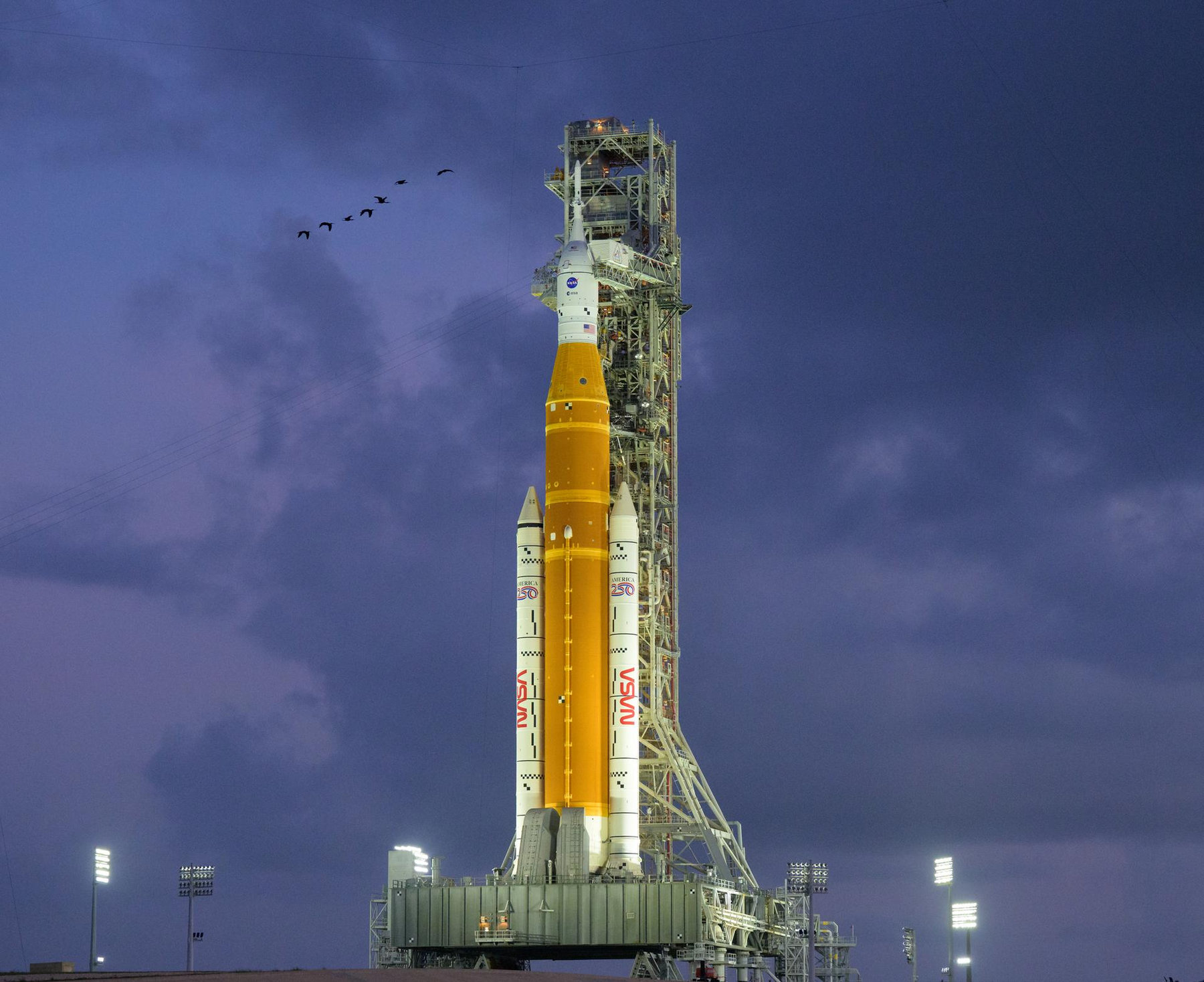
Later tonight, NASA will attempt something it has not done in over half a century. Artemis II, the first crewed mission of the Artemis programme, is set to launch from Kennedy Space Center, carrying four astronauts beyond low Earth orbit and around the Moon.
On paper, it is a ten day mission. In reality, it carries far more weight than that.
This is the first time humans will travel into deep space since Apollo 17. Everything that follows in the Artemis programme depends on what happens here.
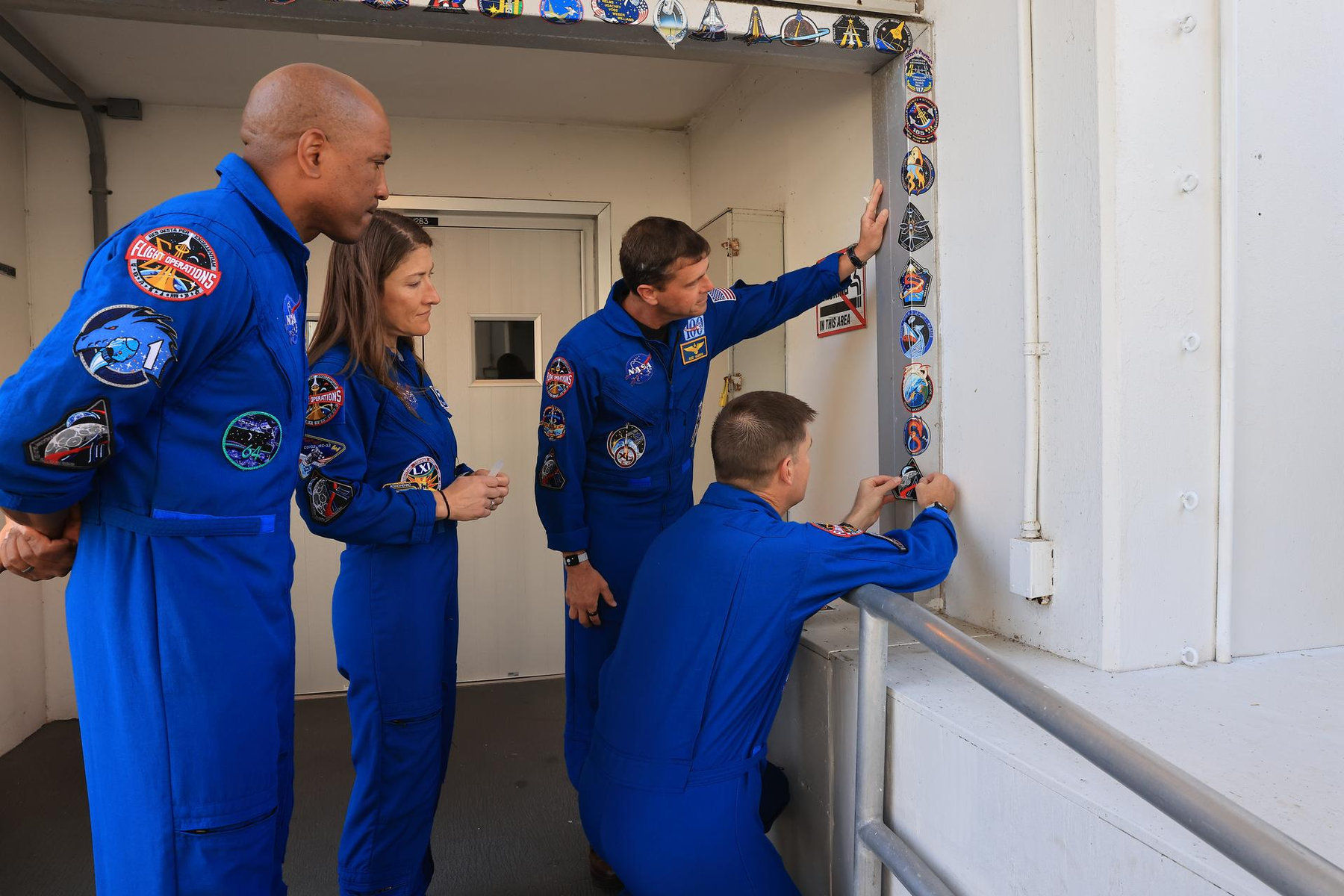
The crew, Reid Wiseman, Victor Glover, Christina Koch and Jeremy Hansen, are not being sent to land on the Moon. Their role is more precise. They are there to prove that the systems designed to take humans back can function where it matters most, far from Earth, without support, and without error.
The mission profile reflects that. Following launch, the Space Launch System will carry Orion into orbit before committing it to a translunar trajectory. From there, the spacecraft will travel around the far side of the Moon and return to Earth, covering a distance that pushes beyond anything experienced in recent human spaceflight.
There is no spectacle built into that path. It is clean, deliberate and unforgiving. Every phase of the mission is designed to answer a single question. Does it work when it has to?
The build up to this launch has been defined by that same mindset. Delays have not been treated as setbacks, but as necessary pauses. Every adjustment has been made with the understanding that once this vehicle leaves the ground, there is no simple correction available.
Inside the Orion capsule, the environment reflects that clarity. The crew operates within a structure that has been tested repeatedly, but never like this. Simulation only goes so far. At a certain point, the system has to prove itself in real conditions, with people onboard.
The most critical moment of the mission will not be the launch itself, but the burn that sends Orion towards the Moon. That is the point of commitment. Without it, Artemis II remains an orbital mission. With it, the spacecraft moves beyond immediate reach and into deep space operations.
From there, the mission changes in character. Communication delays increase. The margin for intervention reduces. The crew becomes more reliant on the systems around them and on their own judgement.
On the far side of the Moon, there will be a period where contact with Earth is lost. It is brief, expected and built into the mission design, but it represents something larger. It marks the return of human spaceflight to a place where real time connection is no longer guaranteed.
The return to Earth will place equal demands on the spacecraft. Re entry from lunar distance involves higher speeds and greater thermal stress than missions confined to orbit. The heat shield, guidance systems and recovery operations must all perform without deviation.
There is no partial success in a mission like this. It either proves the system or it does not.
If Artemis II delivers, the next phase of the programme moves forward with clarity. Artemis III, currently planned as the first return to the lunar surface, becomes a matter of execution rather than uncertainty. Beyond that, the long term objective begins to take shape. Sustained presence, infrastructure and the ability to operate beyond Earth on a continuous basis.
That is where this mission extends beyond itself.
Because what Artemis II is really doing is redefining the boundary of human spaceflight. For decades, that boundary has remained close to Earth, shaped by the limitations and priorities of the systems in place. This mission pushes that boundary outward again and tests whether it can hold.
If it does, the direction is clear. The Moon becomes a destination that can be returned to with intent. Mars moves closer from concept to plan.
If it does not, the timeline changes.
That is the reality behind the launch tonight.
Artemis II is not the moment we go back to the Moon.
It is the moment that decides whether we can.
Continue Reading
More Technology
TikTok’s Ad Free Push Signals A Bigger Shift In The Future Of Digital Advertising

Krafted Launches Kickstarter Campaign for Edge, the World’s First Slim Laptop Power Bank with a Replaceable Ba

Vinted’s €8 Billion Valuation Signals That Resale Is No Longer Adjacent To Retail. It Is Retail.
team.blue Pushes AI Into The Core Of Small Business Infrastructure

Stories worth your
weekend.
A handpicked dispatch from Hinton's editors. The long reads, the people, the openings, the things worth knowing. No filler.