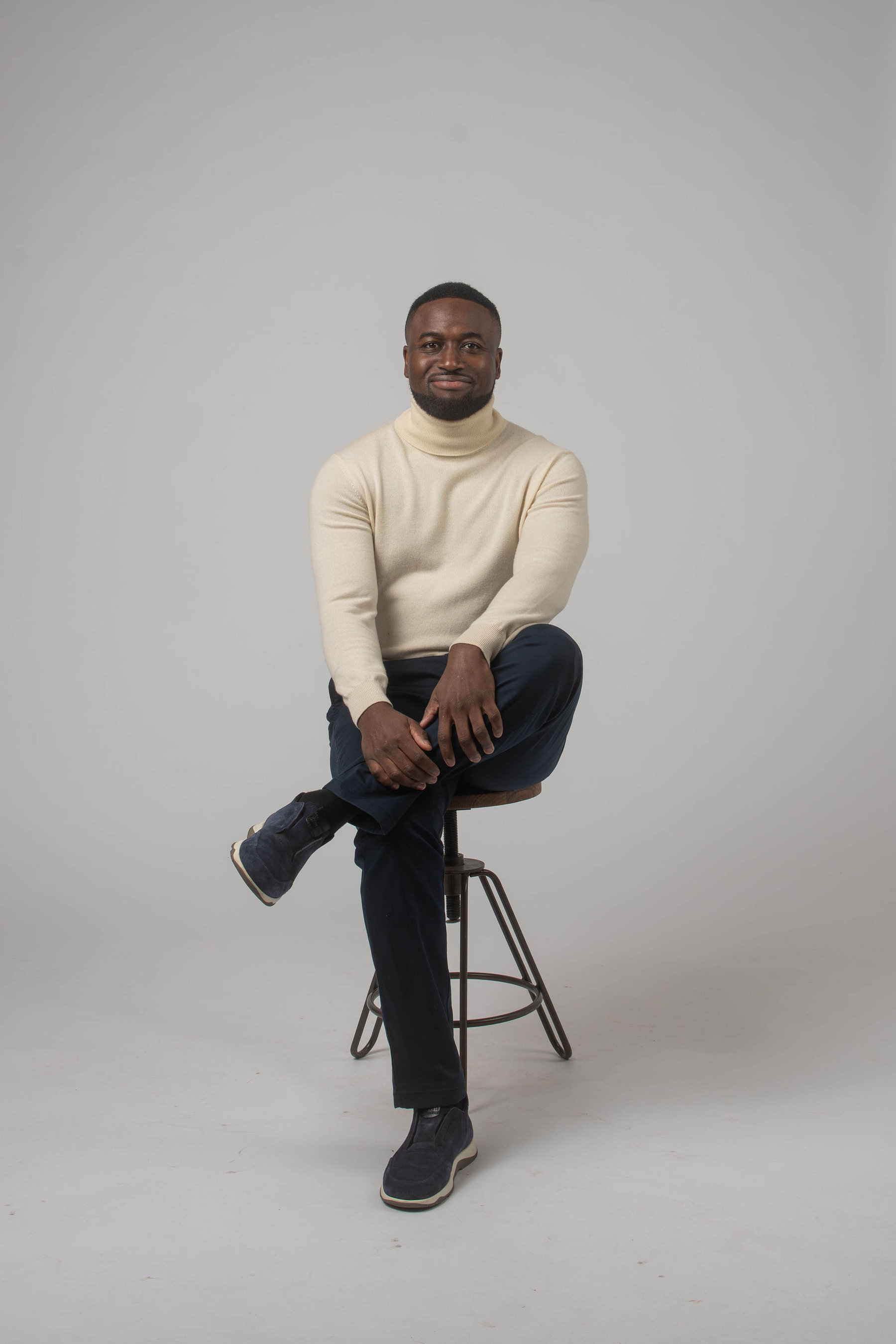
Some books are written to be read. Others are written to be used.
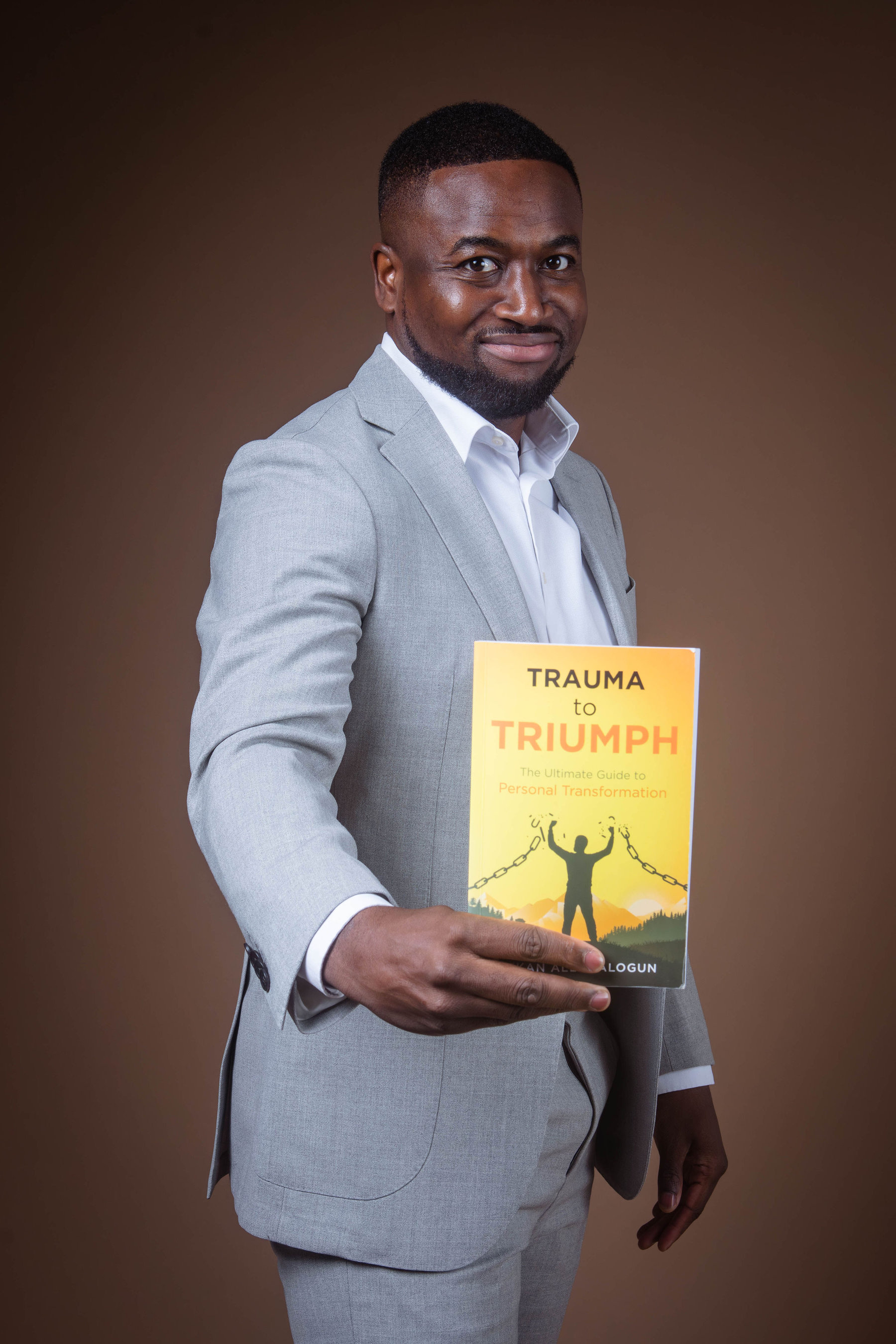
When Hinton Magazine last spoke with Lekan Alli Balogun, the conversation centred on the foundations of Trauma to Triumph. The story behind it. The thinking that shaped it. The personal journey that led to its creation. This time, the focus shifts. Not to where the book came from, but to what it has become.
Since its release, Trauma to Triumph has moved beyond the page. It now lives in the decisions people are making, the conversations they are having, and the way they are beginning to see themselves. For Lekan, that shift has brought a different kind of awareness. Writing the book was one thing. Standing behind its impact is something else entirely.
In this March 2026 cover conversation, he speaks with a level of clarity that only comes after reflection. About questioning his own thinking. About stripping away noise to hear his own voice. About the responsibility that comes with being invited into someone else’s inner world.
At its core, Trauma to Triumph remains exactly what it set out to be. Not a message to admire, but something to apply. And as this conversation reveals, that process has not only shaped its readers, it has continued to shape its author.
Writing a book often forces an author into a deeper dialogue with themselves. During the process of completing Trauma to Triumph, were there ideas or beliefs you once held with certainty that the act of writing challenged or reshaped for you?
100%! Writing Trauma to Triumph forced me to interrogate what I actually believe, not just what I’d picked up from books, podcasts, and social media over the years.
At one point I literally stopped listening to podcasts and came off social media so I could hear my own thoughts without that constant noise in the background.
When I did that, I realised how many of my ‘strong opinions’ were just echoes of other people’s voices. I had to sit with each idea I was putting into the book and ask, ‘Do I genuinely believe this, or have I just absorbed it because it sounded good?’ That process reshaped a lot for me.
The big shift was understanding I need to do that kind of audit more often. We’re always consuming content, but we rarely pause to say, ‘Do I agree with this?
Does this align with the kind of life I’m trying to build?’ Writing the book taught me that reflection isn’t a luxury, it’s a responsibility especially if you’re going to put your beliefs on a page and ask people to trust them.
When a personal story becomes a published work, it stops belonging only to the author and begins to live in the minds of readers. How have the interpretations or responses from readers influenced the way you now view the message of Trauma to Triumph?
One of the things that surprised me most is that the feedback hasn’t been, ‘Oh, your book is good’ or ‘I enjoyed it.’ It’s been more of, ‘I’ve started doing X from the book,’ or, ‘I was just talking to my friend about that concept you mentioned.’When your story starts living in other people’s lives like that, the book stops feeling like something I wrote and starts feeling more like a toolkit people are personalising. It made me see that Trauma to Triumph isn’t just about my journey anymore; it’s about how people adapt the principles to their own reality, trauma, and dreams. Hearing those responses has actually deepened the message for me. It reminded me that the real power of the book isn’t in the pages themselves, it’s in the conversations, decisions and small daily changes it sparks once readers close the book.
Many books about growth focus on the outcome of transformation. In your experience as an author, what are the less visible stages of transformation that people rarely talk about but are essential to the journey?
I think the parts of transformation that really matter are usually the bits no one posts about. The first is the brutal unlearning phase. Before any real growth kicks in, you have to dismantle the limiting beliefs and inherited narratives that came from your trauma, your upbringing, or your environment. That feels less like ‘glow-up’ and more like emotional demolition work. Then there’s the disorienting limbo in the middle. You’ve dropped the old patterns, but the new habits aren’t solid yet, so you’re in this awkward in between where you feel like you’re going backwards. On the surface nothing looks different, but internally everything is being rewired, and that can be lonely and confusing.
Finally, there’s the quiet maintenance grind. Triumph looks exciting on the outside, but keeping it alive is often very unsexy, daily check-ins with yourself, adjusting your environment, catching your old patterns before they spiral. It’s doing the work when no one is clapping. If you skip that stage, you don’t stay transformed for long; you just have a good season and then slide back.
The written word has long been a powerful tool for shaping thought and culture. As an author entering this space, how conscious are you of the responsibility that comes with influencing how people think about their own lives?
I’m very conscious of that responsibility, because when someone picks up my book, they’re basically inviting me into their inner world. They’re letting my words sit next to their memories, their pain, their hopes and I don’t take that lightly. Because of that, I have a few non‑negotiables. The first is honesty. I refuse to sugarcoat trauma or pretend transformation is neat and effortless. If I’m asking you to reflect on your life, the least I can do is be real about mine.
The second is dignity. I never want a reader to feel talked down to, analysed, or reduced to their worst moment. Even when I’m being direct, the aim is always to preserve a person’s sense of worth, not strip it away. And then it has to be practical. It’s not enough for the book to sound inspiring for a weekend and then fade. I feel a responsibility to give people tools they can actually use so that when they close the book, they feel a bit more hopeful and a bit more equipped to do something with that hope
Every serious book is also a reflection of its time. In your view, what is it about the current cultural moment that makes the ideas within Trauma to Triumph resonate so strongly with readers today?
I think people are tired of being told to ‘just be positive’ in a world that feels anything but stable. That kind of message can almost feel offensive when you’re juggling real anxiety about money, work, relationships, and the future. For a lot of us, trauma isn’t this rare, dramatic event anymore; it’s the backdrop of everyday life. There’s the mental health crisis, the cost-of-living pressure, the constant negative news cycles, and the speed of change with technology. All of that creates a level of invisible weight people are carrying around quietly.
In that context, Trauma to Triumph resonates because it doesn’t pretend everything is fine, and it doesn’t stop at ‘think positive’. It acknowledges the heaviness people are living with, but it also gives them a structured way to process it and move through it. I think readers are drawn to that balance: being told the truth about how hard things are, while still being shown that transformation is possible in very practical, human steps.
In writing about personal evolution, there is often a tension between honesty and vulnerability. How did you decide what to reveal, what to hold back, and where the boundary should lie between the personal and the public?
For me, the boundary between personal and public started with one simple question: ‘Does this serve the reader, or is this just me oversharing?’ I must have read the manuscript dozens of times, and each revision was a kind of filter. If a story clearly supported the chapter theme or a specific subheading, it stayed. If it was just there because it was dramatic or emotional, it usually got cut. I also paid attention to how it felt in my body when I read certain passages back. If something felt necessary and authentic, even if it made me a bit uncomfortable, that was a sign it probably belonged in the book. So in the end, the line wasn’t ‘share everything’ or ‘hide everything’. It was: share enough of my story to build trust and credibility, but shape it in a way that keeps the focus on the reader’s growth, not on my personal life for its own sake.
Many readers approach books like yours looking for direction during uncertain moments in their lives. What do you hope someone discovers about themselves while reading Trauma to Triumph that they may not have realised before opening the first page
I hope they discover that they’re not as broken as they think they are. A lot of people open Trauma to Triumph believing their pain says something permanent and negative about who they are, but as they move through the book, they start to see themselves differently. They realise their resilience isn’t theoretical, it’s already proven by everything they’ve survived so far. They also begin to notice where they’ve been stuck in survival mode, running strategies that once protected them but now hold them back. The big shift I want is that they stop seeing themselves as something broken to repair and start seeing themselves as a person with strengths, empowering habits and choices they can deliberately lean into.
Authors often speak about the quiet discipline behind writing. What did the process of structuring and shaping Trauma to Triumph teach you about patience, focus and the craft of turning lived experience into something meaningful for others?
Structuring Trauma to Triumph was a real lesson in quiet discipline. It took a while to land on the final structure and direction, but every new draft revealed something fresh and sharpened my focus. I wasn’t just editing sentences, I was stress‑testing the message. That process taught me that patience isn’t passively waiting; it’s staying with the work long enough to strip away anything that’s just motivational fluff. I kept coming back to one question: ‘Does this move someone from pain to agency today?’ If the answer was no, it didn’t matter how good the story sounded, it had to go.
In the end, turning my lived experience into something useful for others was about restraint and clarity. It taught me to slow down, be patient with the process, and stay focused on what actually helps the reader right now. My rule became simple: honour what I’ve been through, but only keep the parts that genuinely help someone move from pain towards action.
Once a book is written, it becomes part of a larger conversation about growth, identity and human potential. Where do you see your work sitting within that wider dialogue, and what perspectives do you hope it contributes?
I see Trauma to Triumph sitting in the space between classic self‑help and traditional trauma books. A lot of the wider conversation is still obsessed with motivation and ‘staying inspired’, but in real life, motivation is overrated and accountability is massively understated. In the bigger dialogue about growth and identity, I’m trying to shift the focus from ‘How do I feel more motivated?’ to ‘How do I put structures in place so my discipline carries me on the days my motivation disappears?' The book brings together lived experience, mindset and practical tools across daily life, including finances, habits, relationships and purpose, so the ideas do not stay as theory. I hope the book adds a more grounded kind of hope. Less ‘you can do it’ and more ‘here is how you can hold yourself accountable in small, consistent ways that actually change your life’. If it helps people be more honest about their trauma and take greater ownership of their next chapter, then it is doing what it was written to do.
Looking ahead, how has the experience of writing Trauma to Triumph shaped the way you think about your role as an author going forward, and what kind of conversations do you hope your work continues to spark in the years to come?
Writing Trauma to Triumph has clarified my role as an author. I now see myself as someone who helps people take ownership of their story, rather than someone who simply inspires them for a moment. It has made me much more intentional about writing in a way that points people back to their own power and responsibility. Looking ahead, I want my work to sit firmly in the conversation about personal sovereignty. I hope it encourages people to believe that success is genuinely in their hands, and that they can design a life that reflects who they are, rather than just accepting whatever is handed to them.
If what I write helps people talk more openly about their self-worth and encourages them to design and live by their own version of success, I will know I am doing my job as an author.
What emerges from this conversation is a grounded understanding of what transformation actually demands.
Not the visible moments people tend to focus on, but the quieter work that sits underneath it. The unlearning. The uncertainty. The discipline required to keep showing up when nothing feels certain or impressive. It is in these moments that the ideas within Trauma to Triumph take on their real meaning.
Lekan Alli Balogun does not position himself as someone offering answers from a distance. If anything, he speaks as someone still engaged in the same process he writes about. Questioning. Refining. Staying honest about what holds and what no longer does.
There is a clear sense that the book was never meant to exist as a finished statement. It is part of a wider conversation about ownership. About taking responsibility for how you think, how you act, and ultimately how you shape your life.
If there is one thing that stays with you, it is this. Change is not something that arrives. It is something that is built, often quietly, often without recognition, but always with intention.
And that is where Trauma to Triumph finds its place. Not in what it says, but in what it asks people to do next.

Continue Reading
More
World Monuments Fund Returns To Italy With A Restoration Project Shaped By War, Memory And Reinvention

Joan Eardley’s North Sea Paintings Still Feel Wild Enough To Blow You Over

Heidi Normanton on Building HeyLO!, Rejecting Diet Culture and Bringing Joy Back to Bread
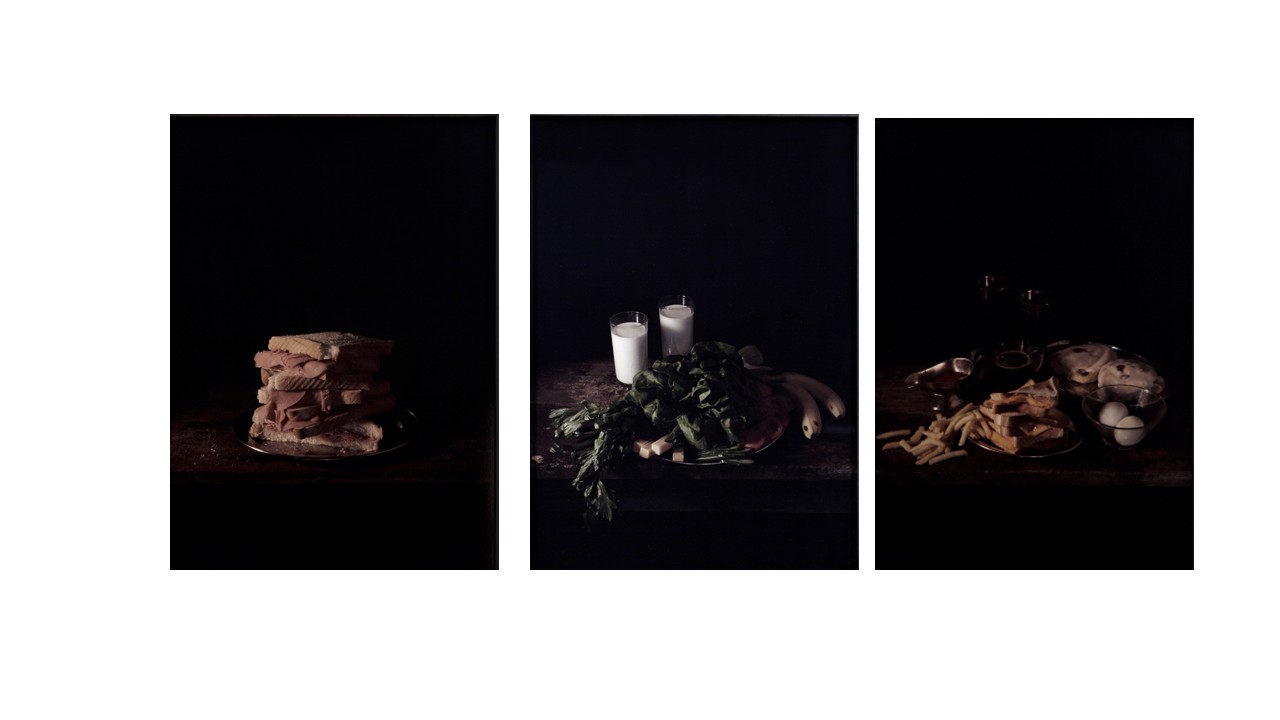
Mat Collishaw’s Death Row Paintings Turn America’s Final Meals Into Modern Vanitas

Stories worth your
weekend.
A handpicked dispatch from Hinton's editors. The long reads, the people, the openings, the things worth knowing. No filler.