Retail’s AI Moment Has Arrived, But Execution Is Falling Short
Discover how AI is revolutionizing UK retail but falling short in execution. Learn why AI adoption hasn't translated to impactful experiences.

Artificial intelligence is already embedded in the UK retail landscape. According to research from CI&T, more than 60% of consumers are now using AI tools as part of their shopping journey, with over half doing so regularly. On the surface, adoption is not the challenge.
The issue is that adoption has not translated into impact.
Despite widespread usage, nearly 70% of consumers cannot identify a single AI-driven retail experience that has meaningfully improved how they shop. This disconnect highlights a critical gap between capability and execution. Retailers have invested in AI, but they have yet to integrate it in ways that deliver tangible, memorable value to the consumer.
Part of this tension is shaped by the broader economic environment. UK consumers are operating under sustained cost-of-living pressure, which has altered how purchasing decisions are made. While 64% say they intend to be more cautious with spending, this does not equate to reduced activity. Instead, it reflects a shift towards more deliberate consumption.
Retailers that are performing well in this environment are those that reinforce a sense of value. Brands such as TK Maxx and Tesco continue to see strong engagement, driven by pricing structures and loyalty mechanisms that give consumers a perception of control over their spending. The success of these models suggests that consumers are not withdrawing from the market, but recalibrating how they engage with it.
This is where AI has the potential to play a more meaningful role, but only if it is applied with precision. Current implementations often prioritise capability over usability, resulting in experiences that add complexity rather than reduce it. For consumers, convenience is not simply about speed. It is about conserving mental effort, reducing friction and making decisions easier to navigate.
The modern path to purchase is increasingly fragmented. Consumers move between search engines, marketplaces, social platforms and, increasingly, AI tools such as ChatGPT. Research indicates that around 70% of consumers have made purchases through social media, while a growing share are beginning their journey within AI-driven environments. This convergence of discovery, research and transaction presents an opportunity for retailers to create more cohesive experiences, yet in practice, many journeys remain disjointed.
One of the most persistent points of friction is the disconnect between digital and physical retail. A significant proportion of consumers report finding that products researched online are unavailable in-store, undermining confidence and disrupting the purchase process. This “last mile” of retail, where intent converts into transaction, remains one of the weakest areas of execution.
Trust further complicates the landscape. Concerns around data privacy and algorithmic bias remain high, with more than 80% of consumers indicating that a data breach would influence their shopping behaviour, and nearly half stating they would stop engaging with a retailer altogether. In this context, AI must not only be effective, but also transparent and credible.
There are, however, areas where AI is beginning to demonstrate clearer value. The resale market has adopted AI in a way that enhances core functions such as pricing, product discovery and matching, delivering immediate and understandable benefits to the user. In contrast, the luxury sector has taken a more cautious approach. While the audience is highly engaged and digitally active, brands are navigating how to integrate AI without compromising brand identity or the perceived quality of the experience.
Looking ahead, the role of AI in retail will be defined less by its presence and more by its application. The priority for retailers is not simply to implement AI, but to embed it in ways that support the consumer’s objective: to find the right product efficiently, confidently and with minimal friction.
The findings from CI&T suggest that 2026 will represent a turning point. Consumers are already using AI, and their expectations are established. What remains uncertain is whether retailers can close the gap between what the technology enables and what the customer actually experiences.
The brands that succeed will be those that focus less on innovation for its own sake and more on execution that delivers measurable, everyday value.
Continue Reading
More Technology
TikTok’s Ad Free Push Signals A Bigger Shift In The Future Of Digital Advertising
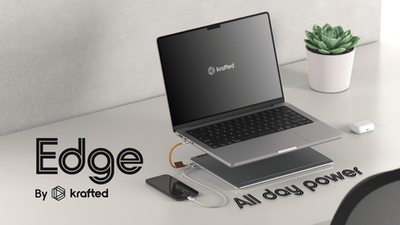
Krafted Launches Kickstarter Campaign for Edge, the World’s First Slim Laptop Power Bank with a Replaceable Ba

Vinted’s €8 Billion Valuation Signals That Resale Is No Longer Adjacent To Retail. It Is Retail.
team.blue Pushes AI Into The Core Of Small Business Infrastructure

Stories worth your
weekend.
A handpicked dispatch from Hinton's editors. The long reads, the people, the openings, the things worth knowing. No filler.