_edited.jpg)
Jagoda Bednarsky Turns Image Overload Into Something You Actually Have to Look At
- Hinton Magazine

- 14 minutes ago
- 2 min read
There is no shortage of images. That is the problem.
They arrive constantly, layered, repeated, stripped of context and replaced before they settle. Jagoda Bednarsky does not try to escape that. Her work moves directly into it and starts rearranging.
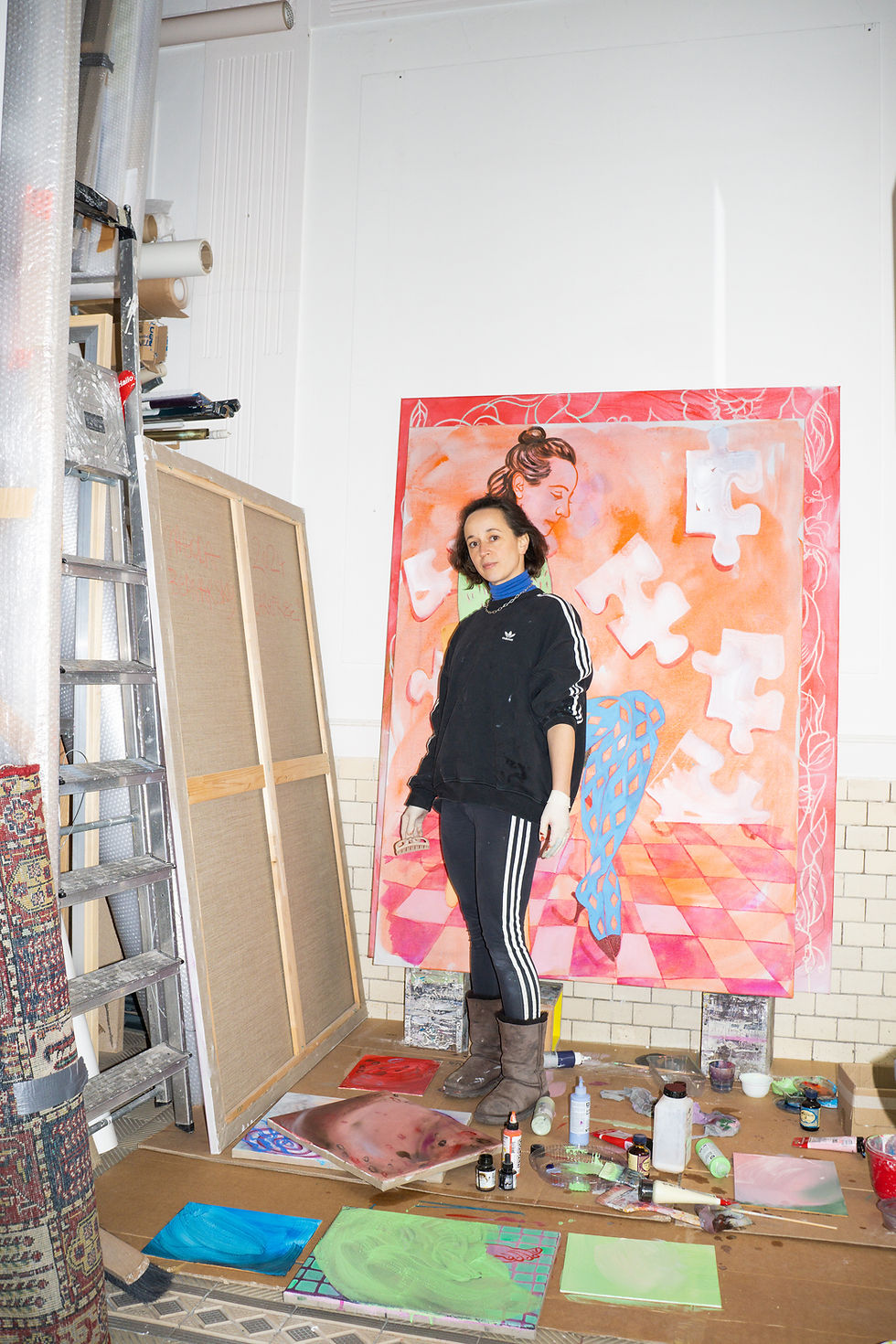
Self as Solvent at ARTEFACT Gallery builds from that premise. Not a clean presentation of new paintings and watercolours, but something denser, more fragmented, closer to how visual culture actually behaves now. References appear, dissolve, and return in altered forms. Nothing holds its original position for long.
The process matters as much as the outcome. Bednarsky pulls from art history, popular culture, and personal memory, then breaks those sources down until they lose their fixed meaning. What remains is a set of visual fragments that are rebuilt through repetition and variation. It is controlled, but it does not feel rigid. There is movement in it, a sense that the image is still shifting even once it has been placed on the surface.

That idea runs clearly through the new watercolours. They feel lighter at first, more immediate, but the structure underneath is the same. Motifs repeat, colours echo, and meaning builds slowly rather than presenting itself upfront. You do not read the work in a single pass. It takes time to settle.
The Shadowland series pushes that further. At a distance, the compositions register as landscapes or abstract forms. On closer inspection, they shift. The shapes resolve into something more specific, bodies, fragments, suggestions of femininity and motherhood that are not presented directly but emerge through repetition. It is not subtle, but it is not immediate either. The recognition comes a step later, which is where the tension sits.
What holds the exhibition together is its refusal to fix meaning too early. Themes are there, self image, voyeurism, wellness culture, identity, but they are not presented as conclusions. They sit within the work rather than explaining it. That leaves space for interpretation, but also requires attention. It is not work that gives itself away quickly.
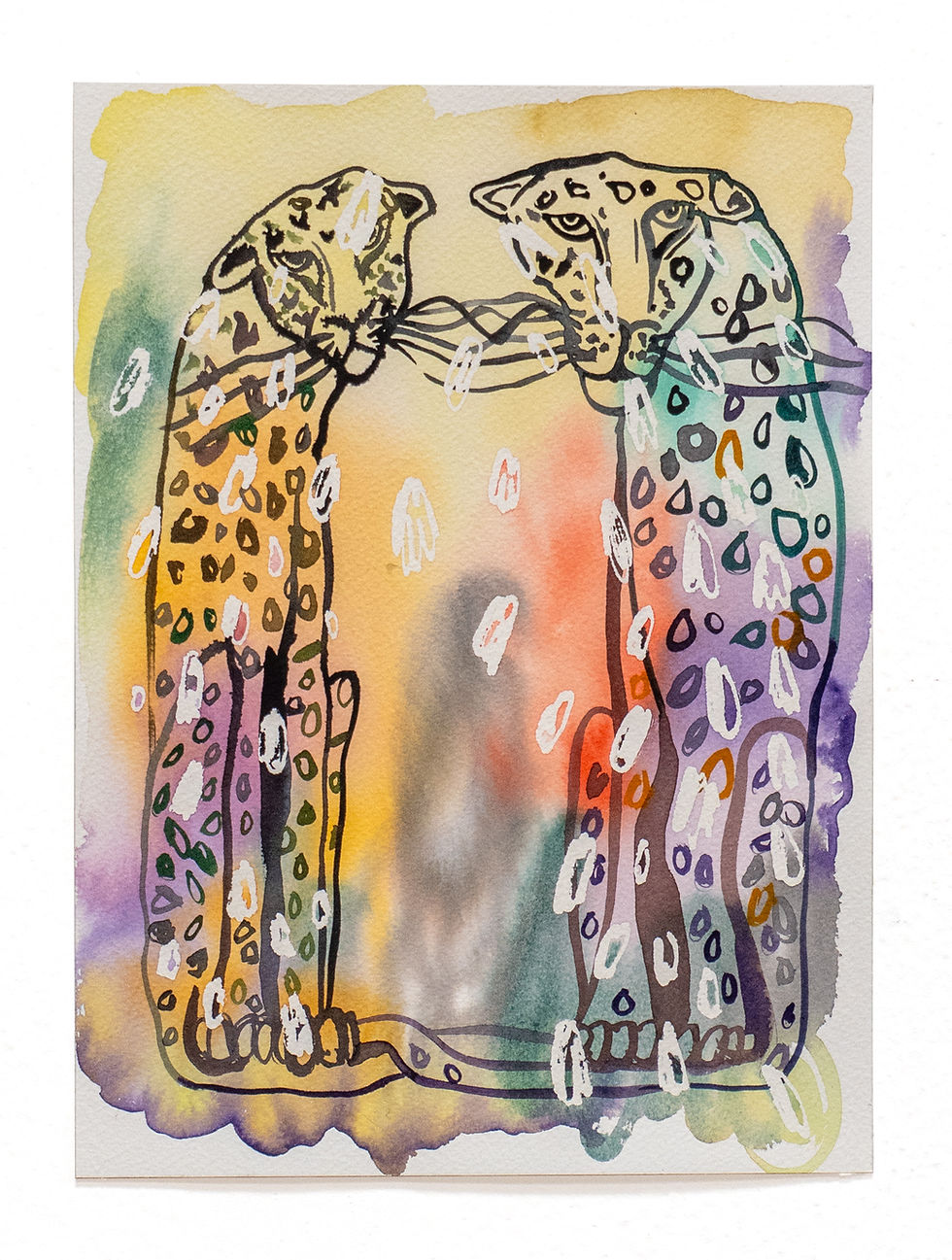
There is also a sense of accumulation running through it. Not just of images, but of influence. The more you look, the more connections start to appear, between references, between materials, between ideas that initially felt separate. That layering is deliberate. It mirrors the way images function outside the gallery, constantly overlapping, rarely existing in isolation.
What Bednarsky does is slow that down just enough to make it visible.
The result is not clean or resolved, and it is not meant to be. It reflects a visual culture that is excessive, repetitive, and difficult to pin down, then reshapes it into something that can actually be held in place for long enough to understand.
That shift is where the work starts to land.


Comments